

Diesel Dieter versus Electric Ernie… Currently (2026) probably the fiercest battle right after post-corona opinions :-). Yet the matter is so simple: Electric wins. Always.
Why Electric Always Wins – A Retrospective.
We don't really need to explain that, we can just take a look into the past. Humanity has needed kinetic energy since becoming sedentary.
Thermal energy that they had already needed for millennia, for heating and cooking. Here, electricity only plays a meaningful role since affordable heat pumps became available. But that's a completely different topic – even though heat pumps will „win“ as heating devices for the same reasons listed here.
Kinetic energy has played a role for hundreds of years, but essentially for only one purpose: processing grain into flour. Or to make oil from seeds. Mills.
The settlement of humanity obviously occurred for the primary purpose of agriculture, and specifically for grain products as food (or possibly even primarily as a source of alcoholto cultivate. The grain kernels were previously processed into flour or groats with a lot of human labor, which soon led to mills as a technical advancement.
These required kinetic energy (without going into the to go into the full details of a mill).
The beginnings of kinetic energy were still work (performed by humans or animals, Göpelgang or Göbbelgang). However, water and wind were soon added as driving energy. Renewable energies! There was nothing else back then... But we'll come back to that later.
The advantage was clear: it no longer required overly expensive and low-performing humans or animals to power milling facilities. Even in early times, a windmill could generate performance around 30 kW. A trained human manages about 200-300 watts, a horse as a standard size 736 watts. Therefore, windmills and watermills (with the usual 5-15 kW at the time) were already vastly superior to these energy sources.
And: Back then, the wind and water didn't send bills. Operating a mill with wind and water power made economic sense centuries and millennia ago! However, even back then, the initial investment was significantly higher than, for example, with capstan systems. Thousands of years ago: It costs money to save money. And otherwise, you were just anticipating Harbeck by centuries: If there was no wind or no water flowing, you'd just work through the night and grind the next day.
Then came the steam engine. This provided much higher energy, i.e., driving power. However, due to its construction and weight, it was immobile, just like wind and water mills. They stood where they were built. In contrast to the regenerative drive systems, a steam engine could in principle be set up anywhere its driving energy was needed. Thus, it was already significantly more flexible than the previous technologies... and thereby drove the regeneratively powered wheels into the realm of museums and economic insignificance. OK, not always, as the old systems could run significantly more cheaply in effect. Thus, the remnants were destroyed by large corporations by law. Fossil-Altmeier and Gas-Katie thus already had role models very early on for your state-sponsored destruction of future technologies.
Steam engines eventually became so light that they could be installed in ships (where weight and space are not as important) and on steel rails (then called railways). Due to their weight and space requirements, they did not play a significant role as road or agricultural vehicles. However, the kinetic energy they generated could only be utilized in this specific form: as kinetic energy. In ships, this was directly transferred to the drive shaft for the propeller or paddle wheels, the same for steam locomotives. In factories, it was transmitted through drive belts and transmission shafts throughout halls, and in mills, it directly powered various mechanisms, especially the millstones.
The movement could not be „transported“ over a greater distance, but had to be „consumed“ locally. A storage of kinetic energy was not possible.
Internal combustion engines were already so compact and powerful that they could be used in airplanes, electric locomotives, and automobiles, as well as being a much more flexible drive for tools and machines. However, storing and remotely using kinetic energy only became possible through the intermediate step of electricity, which was also made usable around the same time.
With electricity, the use of kinetic energy could now suddenly occur independently of location via power lines, as well as independently of time through various storage options, which hadn't been possible before.
This is nothing new, what's interesting about it is the transition period!
Water and wind-powered mills were likely used for millennia, with documented use for approximately 8 centuries. And after the advent of steam engines as a universal source of motive power in Germany around 1785, it took about 180 years until the last legally mandated water and wind grain mills were shut down.
Steam engines played no significant role as motor vehicles, but their use in railways and as power machines was only made possible by internal combustion engines (diesel and Otto engines), which were practically usable from around 1890. The The last steam locomotive in West German railway service was acquired at the end of the 1950s.. The conversion therefore only took about 60 years, about 1/3 of the time that steam engines still needed to replace regeneratively operated mills.
And even at this time, electrification was playing an increasingly important role at the railway, while motor vehicles only gained significant traction with the advent of internal combustion engines. By 1999, the western rail lines had already been electrified to over 50%, especially on the main routes. As a result, significantly more kilometers were traveled electrically than the 50% figure, amounting to approximately 90% of rail traffic.
This transition now took only about 40 years.
Let's briefly move from locomotion to other users of kinetic energy.
Drill presses and lathes were once powered by steam, and some even by regenerative energy before that. Can anyone today still imagine a drill press with a transmission belt?
Compressed air tools were once powered by dry steam from steam engines (and similar). Can one imagine a workshop today without an electric compressor? Ventilation and exhaust systems, Water supply and disposal (e.g., in mining!) were once the domain of steam engines. Lifts, angle grinders, and jigsaws; high-speed, and therefore less painful, dental drills; the entire dental treatment chair... The list of electrically powered tools has become endless—most of them unimaginable with steam or belt drives. And we haven't even gotten to electronics and microelectronics yet. Let's just think about video cameras, smartphones, projectors, and computers.
And: There's no going back! No one would seriously consider powering a hand drill „somehow“ with a water wheel or a steam engine today. Often, the question would also arise: „How would that even work?“
So, and with this little historical digression, we come to the current disruptive shift: the last domains of combustion engines, and possibly their end.
Diesel generators are increasingly being replaced by solar and battery-powered inverters with virtually unlimited capacity. Those responsible for keeping emergency power generators operational year-round in places like hospitals, for example, can sing a song of thanks. And unlike the previous diesel generators, which could only be operated economically during an actual power outage (costs are irrelevant in an emergency), the inverters, their batteries, and ideally also solar panels on the roof can effectively reduce grid power consumption all year round. Thus, the emergency plan becomes a daily operation.
How will vehicle electrification continue to develop?
The classification by history further up helps here again. The replacement of wind and hydropower plants by steam engines, and in part by internal combustion engines, took several hundred years, if only because there were neither steam engines nor internal combustion engines for the first few hundred years :) After the advent of steam engines, it took roughly 180 years until the old windmills and watermills were replaced. Hydropower plants were often converted directly to electricity generation and thus preserved.
Steam engines could only last for a considerably shorter time. Their heyday lasted only about 60 years before they were largely replaced by internal combustion engines.
And the situation with internal combustion engine vehicles looks even worse... Tesla only really gained attention around 2012 with the Tesla S; while the Roadsters were sold before that, in my opinion, they still count as experiments.
Since 2023, „the Chinese“ have been significantly disrupting the electric car markets, pushing all traditional manufacturers hard.
In 2026, in Germany 25% of new registrations were registered as all-electric vehicles. This is only 13 years after the first practically usable pure electric car (let's forget the early electric ones...). Worldwide, by 2025, about 1/4 of New vehicles at least partially electric. But depending on the country, this looks completely different!
In Norway, there are hardly any internal combustion engines among new registrations. By 2025, Denmark already had more than 60% of new registrations that were at least partially electric. China, which will be the world’s largest automotive market by 2025, has 33% new electric vehicle registrations. In Ethiopia, the import of passenger cars with internal combustion engines is simply prohibited.
These numbers are logarithmic, they grow so each year faster than the previous year. Combustion engines are dying out, and right now.
Where can internal combustion engines still not be replaced, or perhaps never will be?
Airplanes are definitely at the top of the list. It's not currently foreseeable that the necessary energy densities can be achieved. And in the air, an intermediate stop plays a very significant role, compounded by the high energy requirement for every takeoff.
Heavy construction machinery such as bulldozers and excavators, as well as large cranes, also have an excessive appetite for energy. From my perspective, electrification for these will remain limited for a long time, or perhaps forever. Although there are already ideas with battery storage or grid connections via extension cables, this is not realistic in the short term.
Which driver profiles will likely never be satisfied with electric cars?
These are typically found in discussion forums, especially in the Heise Forum, where there's a lot going on. A very typical Here you can see the internal combustion engine user. And then Rene drives then in the meantime electric!
1,000 kilometers every day, no time to refuel, eat, or even pee, ideally with another 1,000 km back the same day. Sure, a bit exaggerated, but that's always the mantra. Let's leave it at that 🙂
What are the arguments against a fully electric vehicle?
A lack of charging infrastructure. That's it. Otherwise, there's a solution today for practically every user profile, including field service employees and those who park on the street.
What are the pros and cons of a hybrid drive?
In short: It's neither fish nor fowl, as the saying goes in German. To many, hybrid sounds like the best of both worlds. In reality, however, it's the combination of the biggest disadvantages from two worlds. I'm not writing here about vehicles that drive their wheels with both combustion and electric power. Those are already dead. But plug-in hybrids are going to make a massive comeback in 2025 and 2026. With these disadvantages:
- MaintenanceAdded to the very inexpensive, low-maintenance battery system is a complete combustion engine with all the garbage you actually want to get rid of. Oil, exhaust system, ignition, air filter, generator... All the things that are supposed to be history with the BEV (Battery Electric Vehicle) are still being lugged around.
- Battery capacity & battery lifeThe big problem with hybrids: batteries that are far too small are overloaded far too intensely, and therefore age („degrade“) very quickly, and thus on their own to a problem which is solely due to their size (or under-dimensioning). Large batteries age (almost) exclusively due to calendar time, that is, over time. LFP loses about 1 % per year at temperatures around 20–25°C, while NMC loses around 2% per year. The key factors here are the duration spent at full charge (SoC around 100%) and the temperature (above 25° isn’t ideal).
- WeightYes… Battery-powered cars are inherently much heavier than most gasoline-powered vehicles. But that doesn't make much of a difference; only the rolling resistance costs more energy. Recuperation, meaning the recovery of electrical energy through engine braking, compensates for a lot of this inherent disadvantage. But then there's also a complete 1.5-liter turbo engine with an exhaust system and generator. This size is now quite well standardized; you'll find this power class in most plug-in hybrids.
Pity: An absolute emergency „combustion engine“ (generator), portable from the hardware store, with 3kW would be completely sufficient for me! When I arrive at my destination, I usually look for a hotel and go out to eat, or have a nice drink, or whatever. If I can't find a charging station on site, I could charge my BEV overnight that way. - Ride comfortHere, the hybrids score just as well as the pure BEVs, apart from the even higher weight.
- Stench And DirtEvery now and then, the crates just stink like any other combustion engine. And you still have to fill them up with gas. And they can leak oil, too.
What speaks in favor of a BEV (battery electric vehicle)?
Oh dear... I can hardly stop!
- Driving pleasure. I have already driven many different vehicles, and also really enjoyed BMW and Passat diesels, and also at 240 km/h on German autobahns at night. But the quiet gliding and jerk-free acceleration result in such „natural“ driving for me as I have never experienced before. Yes, even the increasingly rare trips with the 2.5L Nissan Navara diesel are also fun! But this speed machine stays completely blameless in the garage longer and longer. In the last 12 months we've taken it out of the garage about 5 times.
- Loading or „Refueling“That is the most fun part. Coming home, plugging it in, doing something else, no stinking hands. At home on the grid. At home with solar power. For free at the supermarket. Yes, indeed: my EV hasn't cost me a single cent in subsidies for its 15 thousand km (as of July 2026)! At home it gets solar power anyway (yes, yes, yes, strictly speaking you should factor in the depreciation of the solar system, but who actually does that?). It was only charged once in Davao, our local capital. Also for free, at SM Ecoland. It didn't need it, but since it doesn't cost anything... Probably dirty coal power, though. On the way home I pushed it a bit harder so the coal power was used up quickly. And then put clean solar power back in at home. Luckily, the fresh electricity is stored right at the top of the batteries, so you can get it back out quickly. But looking at the real background: Which combustion engine can you permanently charge at home? Or in front of more and more restaurants? Or in front of the supermarket? Or at a friend's place for a barbecue? That's right: None! That's why I don't care about charging time at all: (M)y EV practically always has enough range „in the tank.“ Yes, that can turn out differently depending on the usage profile, but for very, very many users, this is precisely the use case.
- Energy sourceA BEV doesn't care at all where its electricity comes from. Nuclear power plant or coal power plant? Doesn't matter, plug it in! Solar energy, wind power, nuclear fusion? Go ahead, plug it in! In every country, at every outlet, the electric car takes whatever is offered.
- CostsAround 2025 was the year when BEVs became cheaper to purchase than combustion engine vehicles in Asia. And BEVs are already cheaper to run. Further developments will bring additional cost advantages for BEVs, thus further accelerating the transition.
- RecyclingIn my opinion, another thing will play into LFP's hands: home storage systems are practically already completely LFP. Thus, in the future, worn-out cars will be easily broken down: the old batteries into stationary storage, the motors into the (recreation) industry, interiors as second-hand spare parts (here in Asia, interiors are across the board becoming increasingly high-end and at the same time more similar/identical and thus interchangeable!), and the little bit of sheet metal left over goes into the crusher. A conventional internal combustion car engine, with all its accessories, can practically only be reused in a car of the same model.
The parts of a 400V EV can be reused very flexibly! Air conditioning = aircon, heating (nowadays also often a heat pump with 3-10 kW output, often identical to the car's AC), power steering (= hydraulic pump), motor (80-200 kW industrial three-phase motor), LFP battery in stationary energy storage systems... that's about it! All that's left is a bit of sheet metal and the interior trim. And even that is becoming increasingly interchangeable between brands and models in Asian vehicles.
Zellchemie
A quick introduction to the relevant differences between NMC, LFP, and sodium.
NMC (Nickel Manganese Cobalt)
It has the highest chemical power density by volume and weight. Nothing beats NMC in this segment. NMC is therefore comparatively temperature-stable and can be used in a wider temperature range than LFP. The service life is sufficient for vehicles; NMC batteries will generally long outlive the vehicle around them. They are also the most expensive of the batteries listed here! In vehicles, however, for a long service life, these batteries should ideally only be used between about 10% charge level („SoC“ = State of Charge) and 80%, which somewhat puts their higher energy density back into perspective.
And: They can burn, and unextinguishably so. Even small power banks with just a few watts can easily set an airplane on fire quickly. These batteries burn inextinguishably! This is gladly exploited by the panic press as „Don't buy an electric [car],“ but that is Headline-ready alarmism.
Times a few numbers from 2025 from the USA:
Out of 100,000 cars burned...
3400 Hybrid
1530 Internal combustion engine (makes sense...)
25 BEVs. But only those make it into the headlines!
Maybe there are more NSU Prince and Ford Pinto burnt when all the BEVs are together 🙂 And on top of that, the cars that have already been tested with their hot brakes or their catalytic converter Planted fields are on fire – today itself. What was that for an excitement… is anyone else talking about it?
LFP (Lithium Iron Phosphate, more specifically Lithium Iron Phosphate)
LFP has a slightly lower energy density in both volume and weight. Meaning: To transport the same amount of energy, you need both larger and heavier batteries. The low-temperature efficiency is also lower. An LFP battery must be pre-warmed at cooler temperatures („pre-conditioned“) and can still utilize less of its actual capacity in freezing temperatures. This plays a major role especially in Nordic regions. This inherent disadvantage can be largely offset by battery heaters. LFP batteries do not burn. Well, technically speaking they can of course burn, but the nearly explosive thermal runaway typical of NMC batteries is foreign to them. With LFPs, it is more a matter of them releasing the energy stored within them in the event of damage, and that is also considerable. Just to give an order of magnitude: A standard 200Ah/3.2V LFP cell (roughly the size and weight of a brick) contains 3.2 x 200 = 640 watt-hours. That is enough to bring 8 liters of water from room temperature to a boil! (1 Watt = 1 liter of water heated by 1°C, somewhat simplifiedThis amount of energy has to go somewhere in the event of a short circuit, for example!
An LFP battery can be used quite easily in the range from 2 or 3% (as long as it’s not completely empty—the BMS [Battery Management System] handles that) up to 100%. Even an LFP battery shouldn’t be left sitting at 100% for weeks on end, but fully charging it overnight and using a little bit of power during the day is generally fine.
Tesla and Dongfeng, partly BYD already recommends daily in their manuals, but at least weekly full charging.
Sodium batteries, also called salt batteries
Slightly lower power density per unit weight and volume, but absolutely freeze-resistant and capable of being discharged to 0% without any problems (important, for example, for safe transport). Thermal runaway, a common issue with NCM batteries, is also unknown in sodium batteries. And: Even cheaper to manufacture, but above all using chemicals that are readily available worldwide, without dependence on China!
We will yet experience the greatest upheavals here. While the internal combustion engine is practically fully developed, and the electric motor is inherently so good that little can be improved there, we are only at the beginning when it comes to battery technology... or so it feels. See also the 1C, 4C, 10C charge rates further below.
In the medium term, vehicle manufacturers outside the premium segment will simply miss the boat here with both cylindrical cells and NMC... Please feel free to bookmark this and tease me about it in 2028 if I was wrong.
If you look around Asia nowadays, about 90% (I left some margin for any exotic ones) of the relevant BEVs here are LFP vehicles. NMC no longer plays a role in Asia.
This is also where scaling takes place. Because Chinese trucks, home storage systems, megawatt buffer storage systems, and perhaps ships soon as well... all of them are powered by more or less the same LFPs. In many economically relevant regions in Asia, „cold“ and „pre-conditioning“ simply do not play a role.
And something else is happening here: cars are getting bigger—if not the cars themselves, then the wheelbases (new BYD K-cars for Japan and soon the world). Weight hasn't mattered for a long time, thanks to recuperation. And just like that, a few more LFP or sodium-ion batteries fit into the box.
For the few cold regions, which are also partly relevant to Japan, the sodium battery will become important, and in the future also for stationary energy storage. Simply because „price“ beats everything, otherwise today not every electrical appliance in German households would say „Made in China“.
Of course, NMC is also being further developed for cell phones, drones, tools, etc., where energy density is absolutely critical... in the range of a few watts to a few kilowatts. But the mass market has long been LFP, and slowly but surely, at some point on a massive scale, sodium-ion batteries. This will also make conditioning less relevant in freezing regions, because the batteries can simply handle the cold better „by nature.“.
Is the internal combustion engine fully developed?
Yes, in two respects. A) it is, except in the poor weak, overwhelmed brains of some German politicians („Efficient combustion engines“), there will be no more giant leaps in this technology. They are long at their physical efficiencies.
B) It's simply no longer worth it. For the remaining applications, existing combustion engines are „good enough,“ and not much money is being invested in their development anymore.
Can the electric motor not be optimized any further?
Shortly after their invention, electric motors were already pushing towards an efficiency of 100%, somewhere between 90% and 99%. There are still surprises here from time to time, such as the pancake motor (axial flux motor), which – not least due to even fewer components – even more effective than standard electric motors, or the fine-tuning at VW, which also squeezes out another few percent. However, hardly any giant leaps are to be expected here anymore, but the fine-tuning, like back in the days of the internal combustion engine, will cause a stir here and there once again.
And why are German and European manufacturers struggling so much?
Here we are at the convergence of very smart company leaders and very stupid parroters (Lenin supposedly used the term „useful idiots“ for these obedient parroters) from politics and the media. Germany lost touch with the future a long time ago. Once again. Just like in 2012 with solar and wind technology, which was driven out of Germany by Altmaier with the help of „Gas-Kati". It is simply hardly worth switching to electric in Germany anymore. So people want to run the old plants until the last combustion engine, and then just lock up and let them rot. The future is happening in Asia. This is where new automotive technologies are being built and also developed. An early ban on combustion engines would have disrupted or is disrupting this development. Then German (or American) manufacturers would also have to retool their existing plants. Thanks to the CDU, the Bild-Zeitung, and "Diesel-Dieter," VW, BMW, Mercedes, etc., can still make money in Germany with the old plants, which they use to develop and manufacture modern vehicles in China and Asia. Smart business people. Stupid media. Oh yeah... and Christian Lindner.„Openness to technology" and "Highly efficient internal combustion engine„... what nonsense. The latter do not exist, the former is a dead end. Please remember that the next time someone preaches to you, „But this year really is the year of hydrogen!“ Should Germany ever reach the point where it generates hydrogen from its renewable overcapacities (we have to get there!!!), it belongs Hydrogen as synthesis gas in industry!
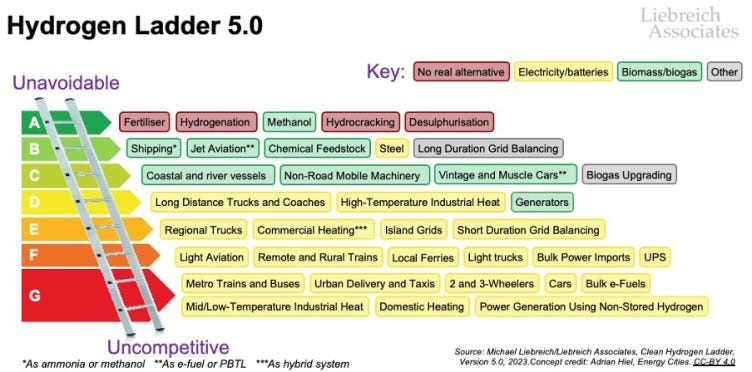
And the Japanese?
Yeah…. that is a funny story by the way! Not a few of the „useful idiots“ parroted obediently that after all Toyota, Mazda, Mitsubishi and others Asians will get by well with combustion engines in the long run, because you simply ignored all the EV hype from the Germans and Chinese. And reality? It has now caught up with you. Entire markets are going Germany and Japan just slipped through the cracks. And the former industry leader Toyota? Expects a complete bankruptcy in the coming years. Why? Because electric simply always wins and a hesitation and procrastination get you nowhere. That is also where it comes from Nissan with its Chinese partnerships slightly better through this transition.
Key points
„Tipping points“ refers to circumstances that can enormously accelerate a more or less foreseeable and predictable development, causing it to effectively „tip.“.
Regarding climate change, it is assumed, for example, that a warming of the Earth's surface will eventually cause the permafrost soils in Siberia to thaw, which will then release huge amounts of methane. This, in turn, will so drastically alter the atmosphere that from that point on, any countermeasures by humanity will be utterly futile. This theory is not to be discussed here; the term „tipping point“ is merely to be clarified.
- Sorrow, Envy & Joy
- Gas station closures
- Districts or cities or entire states are banning internal combustion vehicles
- Government intervention or prohibitions
Let's go through a few tipping points, just to get a feel for it. Let's start with the smaller influences and work our way up to the big ones.
Joy and envy / sorrow
Suffering is easiest to explain right now in 2026. A yellow drake attacks Iran, and Iran bombs a few ships, and suddenly one of the most vital lifelines for crude oil, oil products like diesel and jet fuel, and also for helium is „shut down.“ Along with that, aluminum (precursors) and other raw materials. But the helium from there alone is going to cause much larger disruptions... it's just not as visible as the price of diesel at the gas station. And, oh wonder: Suddenly the Electric car registrations, used electric car sales and electric car orders are skyrocketing. Anyone who doesn't have an electric car yet is watching more or less enviously those weird guys who bought such a dumb Lego-mobile already last year or the year before... and feeling a sense of regret for not having been among the early adopters. Suddenly, a Tesla is cool again...
And those exact early adopters? Clearly, from today's perspective, the EVs from 2020, 201 [sic] etc. were mostly absolute junk. Ranges of 150 km, even in 2025, are only suitable for kindergarten taxi duty, not for everyday life. When turning on a heater or air conditioner—hopefully already installed—immediately shows up in the remaining range, the driving fun is instantly gone. There is no need to debate or sugarcoat that. But even in 2020, there were already „good enough“ everyday Teslas! And even with this class of car, which in terms of development is a decade behind today, there was a free feature still unrecognized or misunderstood by the masses: driving fun! Even today, in 2026, there are still some "Diesel Dieters" who have never driven an electric car. And driving fun can only be experienced, not explained. That is and always was the case with a 5-liter Ford Mustang, and it is still the case with a Tesla, an Xpeng, a BYD. Such a massive combustion engine gives you the feeling of riding a heavy machine. Every modern electric vehicle gives you the feeling of floating on a magic carpet. To this day, I get a goofy grin on my face when I step on the accelerator of my meagerly powered Dongfeng (70 kW/90 hp, which is barely more than a walking frame for electric cars nowadays!) and the box takes off completely smoothly. For the die-hard manual transmission lovers (do they still exist? VW scrapped its manual transmissions after the dual-clutch transmission, didn't they?), there is still the KIA Ioniq 5 with engine sounds and gear shifting. An EV can simulate a manual/automatic transmission. No combustion engine can even emulate the driving feel of an EV.
Performance
In Germany, a de facto upper limit for internal combustion vehicles of „around 2 liters“ has been established for many years. There is only a sparse selection of larger combustion engines, which are then significantly more expensive. Thus, a power limit of „around 200 hp“ has also established itself.
With electric cars today, 700 horsepower is no longer an upper limit. Porsche Taycan GTS / Turbo, Nio ES8 with 520 kW (approx. 707 hp). Cadillac Escalade IQ and the Tesla Model S P85D are just a few examples. Nobody needs that, but in this performance class, it's more about „having“ than „needing.“ And none of them have either „turbo lag“ or „torque interruptions.“.
Equipment
Even today's simpler BEVs practically come standard with: stationary air conditioning (usually not available for love or money in a combustion engine car), stationary heating without any exhaust emissions, a 40, 60, or 100 kW „power bank.“ This feature is particularly awesome: modern BEVs (okay, not the ones from Germany) almost always have a V2L function: depending on the model, up to 3.6 or even 7.2 kW of electrical power can be drawn from the vehicle battery. For a hot plate, a real television, a portable fridge... or on the construction site for the concrete mixer, the plate compactor, the Hilti, the Makita chargers. A massive generator, always along for the ride. No one has to winterize it, remember to change the oil on time, no one has to buy gas... A power bank that reliably supplies 220V all day long while camping, at the allotment garden, or out in the wild. Mind you, these are standard equipment here in Asia. Not paid extras! Even my basic Dongfeng Nammi 01, which costs the equivalent of about 19,000 euros, has all of that! Plus 4-wheel disc brakes on 205-width tires straight from the factory (!), frameless windows with power windows on all 4 doors, inductive phone charging, navigation via phone on the large display, frunk (front trunk... OK, I had to order that separately for 70 euros).
Even the rather inconspicuous advantage of a constantly present 230V power supply sounds harmless at first. Charging a laptop on the go. Operating hot plates anywhere without gas. Running a cooler box at any time. Installing a coffee maker, an ice cream maker, a small welding machine, an angle grinder, a drill... With any combustion engine vehicle, this first entails installing a generator, a 230V inverter, and additional 12-volt batteries. Before you can even plug in the device you actually planned to use, 2,000 to 5,000 euros are already gone. An electric van comes with the long-awaited power outlet straight from the factory. One argument against electric vehicles that is brought up again and again concerns the famous field service workers. However, the fact that they can use their printer, laptop, demonstration equipment, scales, vacuum sealers, and all kinds of other gear autonomously anywhere in the world is conveniently swept under the rug.
Blocking fossil cars from settlements, neighborhoods, cities, and countries
Let's start small: A housing estate, or just individual residents of an estate, no longer wants roaring motorcycles, stinking combustion engines, or oil stains on the newly paved access road. And just like that, an estate is banned for combustion engine vehicles by majority vote.
Unimaginable? Well... In Germany certainly hard to imagine. But, you can't repeat it often enough: Germany is no longer the measure of all things! Imagine a fenced community in San Francisco, a subdivision in China or in the Philippines. Gated residential areas with a single central entrance and exit. Of course, such residential areas can simply change a traffic regulation prohibiting combustion engines from driving through the complex. And that's not even all that far away in Germany either: For example, there are already many areas, which may no longer be ridden with motorcycles. But, as written, Germany is not the measure of all things. Not anymore.
Even such a „minor intervention“ can trigger something else for the immediate surroundings: the nearest gas station or the next 2 gas stations no longer have enough customers and close. And suddenly completely different drivers are affected by this as well. There are still countries where new gas stations continue to be (allowed to be) built, especially countries with inadequate drinking water and environmental protection. In the aggregate, however, there are in the effectively in most countries Gas station closures.
Besides these residential areas, entire cities could also ban internal combustion engines. Impossible? Take a look around Hamburg with the (subsequently lifted) diesel driving ban in large areas or right after Stockholm. Here, too, „thinking out loud“ can lead to potentially unprofitable gas stations being closed immediately or sooner, which again makes internal combustion engines less convenient for larger catchment areas (see next heading).
And, yes, ultimately entire countries decide against combustion engine vehicles. There are very good reasons for this as well! For one thing, consumer competition. Diesel and kerosene are very similar raffinates, and oil refineries can adjust their production processes slightly so that a little less diesel and a little more kerosene is extracted from the crude oil. There is a substitute for diesel: batteries. There is no substitute for kerosene in aircraft.
And of course, in addition to pure resource scarcity, economic and political decisions can also play a role here. Economically: A country might be able to produce electricity very cheaply, as is the case in Norway or Ethiopia. Or a country no longer wants to support, or at least wants to support somewhat less, the madmen of the world. First of all, purchasing crude oil, gasoline, or diesel is a drain of money from one's own economy. If crude oil is procured from abroad for billions, that money is lost to the domestic economic cycle. Period. At the same time, this also usually finances crazy warmongers around the world. Iran, Libya, Saudi Arabia, USA: Almost always, money for crude oil (products) ends up in the hands of unhinged rulers. Both together can be a strong incentive for an economy to minimize the purchase of oil and oil products. And for the transport sector, there is already a „more than good enough“ substitute.
Gas station closures
As already touched upon, there are already in many countries fewer gas stations every year. However, a dense gas station network is the killer argument for many in favor of their beloved combustion engine; the further one has to drive to fill up their diesel, the less attractive burning fossil fuels to get moving becomes.
Charging comfort
That is worth an entire dedicated topic! While new records in charging speeds are currently being celebrated for 2025 and 2026, with speeds previously at 1C now being hyped at increasingly shorter intervals as 2C, 4C, 10C, one thing is completely ignored in the process: By far the most widespread and used charging technology is „slow charging“. This is generally referred to as AC charging, because it typically uses the grid electricity that is available everywhere anyway, which happens to be alternating current (AC = Alternating Current), whereas „fast charging“ is usually handled via direct current (DC = Direct Current). That is not strictly necessary, but it has become the established norm today.
Thanks to the standardization of charging connectors and charging capacities, a very, very large number of people are now able to charge their electric vehicles at home. Arrive, plug in, done. The next day, the car is fully charged, or at least has „enough for the day.“.
Always. Every day. No gas station, no smelly oil-stained hands, no 10-minute forced stop because the jerk ahead of you forgot his PIN. No mixing up diesel and gasoline.
This also means that you can charge at anyone's place who has a wallbox! If a buddy comes over from another city for a barbecue, you can just plug him in briefly to charge (his car, not the buddy...). Depending on the charging power, after 3 or 4 hours of coffee and cake or grilled sausages, he'll have enough kilometers „in the tank“ (in the battery) to drive back home without another stop... and then conveniently charge the box again in his garage or in front of his door there. Also, more and more hotels, cinemas, multi-story parking lots, supermarkets, and restaurants are offering simple AC wallboxes for their guests. This way, you can easily charge the car on the side (sometimes even for free) while shopping, eating, or staying overnight, and no one has to worry about charging points, gas stations, or gas prices. An increasing number of companies are also offering (often free) charging connections in their company parking lots, which also makes electric travel much more relaxed for field service employees, technicians, or sales reps. No diesel, no gasoline, and no wood gas generator offers this kind of convenience! Even better: While the car is waiting for you, you can start the heating or air conditioning before departure, so that after your stay you get into a comfortably climate-controlled vehicle. As described above: A remote-controlled auxiliary heater costs a hefty surcharge in combustion-engine cars, and a remote-controllable air conditioning system is neither available for money nor good words. In an electric car, it is generally standard.
Different charging capacities
When charging with grid power, i.e. „AC“, the charging capacity is mainly limited by two parameters:
A) the power that can be drawn from the household power grid. This is usually limited to 32 amperes at 220 volts. This does not have to be the case; in Canada, for example, you can „draw“ 40A at 240 volts. Yes, America and Canada are also 220V countries! The usual and familiar 110V are supplied to the house via 2 phases, which have 110V (115V) relative to neutral or earth – these supply the classic normal appliances: refrigerator, lights, television, vacuum cleaner. The two phases against each other then have the usual 220V (230V), which are then used to supply things like compressors, air conditioning systems, or vehicle charging. Canada takes a special approach here, as it usually has 120V/240V.
Germany has a rather unique infrastructure here: in virtually every household, 3 phases = three-phase current or three-phase alternating current are available.
This is how we arrive at these charging capacities:
| Number of phases | Voltage (V volts) | Current (I Amperes) | = Charging power (W Watt) |
| 1 (the 110V countries with 2 phases count as one phase here, since they only supply 220V relative to each other) | 220 | 16 | 3.520 |
| 1 | 230 | 16 1 | 3.680 |
| 1 | 240 | 16 1 | 3.840 |
| 1 | 220 | 32 2 | 7.040 |
| 1 | 230 | 32 2 | 7.360 |
| 1 | 240 | 32 2 | 7.680 |
| 1 | 240 | 40 4 | 9.600 |
| 3 | 230 3 | 16 2 | 11.040 |
| 3 | 230 3 | 32 2 | 22.080 |
1 = Typical power output when connected to a standard household electrical outlet. Here, the house wiring must be taken into account; not every outlet or connection cable that is „in itself“ designed for 16A (= amperes) can deliver this 16A continuously! Therefore, in Germany, for example, household outlets with 1.6 mm copper cables have long been fused for only 10A, because due to balcony solar power plants, car chargers, table grills, etc., there are an increasing number of devices that can draw the requested power not just for a few minutes, but for hours. In America, parts of Japan, Canada, and other countries, household outlets provide only 110 or 115V, meaning correspondingly only half the power (e.g., 1,760 watts) can be drawn here.
2 = Connection strictly requires a suitable installation with reinforced cables and permanently screwed connection lines (or correspondingly suitable high-current sockets), a so-called „wallbox“. The wallbox itself is merely an illuminated switch that can determine whether a car is connected to the line, and perhaps whether a secure ground is present... but in principle, this box simply switches the mains power through to the vehicle's charging plug upon command from the vehicle, nothing more. It is therefore quite possible that a completely depleted BEV (battery electric vehicle) might not even manage to signal „switch on“ to a wallbox. Therefore, this is now generally resolved using resistors with specific values, so that even a totally depleted car can be supplied with initial power via a passive circuit.
Three-phase current, e.g. in Germany, is often referred to as 400V because the three phases provide a voltage of about 400 volts relative to each other. Technically, however, the vehicles use 3 x 230 V at 32 amperes (22 kW), not 1 x 400 V at 32 amperes (13 kW).
4 = Canadian special form. To my knowledge, the combination of 2 x 120V = 240 volts with an allowed 40A in home installations (with appropriately rated cables & outlets) does not exist anywhere else in the world… and that is why onboard chargers—as the chargers built into the car are called—are also only found in very few vehicles. To my knowledge, only in older models of Tesla's X and S, which could even charge at times with 2 chargers = 80 A = 19 kW… but that seems to have completely died out by now, and the 32A maximum charging current according to the table above has prevailed for „home charging.“ Understandable for manufacturers: Through fewer special designs and more standardization, these important components („onboard chargers“) are becoming cheaper and more standardized. Vehicles without an AC charger are also dying out; I believe the Vinfast VF3 is one of the last BEVs that no longer has/had a built-in („onboard“) AC charger.
Why don't all cars charge „at home“ with 3-phase power = 22 kW? That would be much faster!
Because there is only one power grid connection of this type in a few countries on Earth, e.g. in Germany. However, Germany is no longer the „nerve center“ of the world, and so it is a cost issue whether manufacturers install the 1-phase charger that can be used “all over the world,” or the 3-phase charger that is about 3 times as expensive, and in any case 3 times as complex.
Why do cars charge „at home“ with 3 x 220 V instead of 1 x 400 V?
You can already see that from the example calculation: 400V x 32 amperes = 12,800 watts = 13 kW. 3 x 230 V x 32 amperes = 22 kW.
By the way, you can also see this in instantaneous water heaters, which have 3 heating elements with 7,360 watts each = 22 kW. There are also other designs with 21 kW, 18 kW, etc., but the basic technology is the same.
By the way, that is quite different for compressors, heat pumps, circular saws, and other devices driven by synchronous motors: these do not use the 3 phases of three-phase current individually, but rather precisely as a three-phase current.
Another reason is much more important: This way, a 3-phase charger can also be operated on a 1-phase power grid at any time, and will then simply deliver 7 kW. The other two charging units are then simply idle.
Excursion: What do these 1C, 0.25C, 0.1C, 2C, 6C, 10C actually mean?
Battery charging capacities are often given in amperes for a specific battery, e.g. in mA for smaller rechargeable batteries for clocks and remote controls. For a cell chemistry, i.e., a specific type of battery, this does not make sense since the charging current increases with capacity. Therefore, the standardized notation of the charging current in capacity (C) is used here.
Those of us who are older certainly still remember that standard household nickel-cadmium (NiCd) batteries (for flashlights, radios, etc.) were supposed to be charged at 1/10 of their capacity in amperes. For example, a 600mA AAA battery at 60 mA, which resulted in a charging time of 10 hours. Today, this is briefly written as 1/10C, or 0.1C. 0.1 x 600 = 60. Even back then in model sports, these NiCd batteries were often subjected to 5 times this charging rate. For instance, the 5Ah battery of a model race car was not charged at the then-usual 500 mA for 10 hours (often 11 hours due to charging losses), but sometimes at 5A (amperes) in one hour at a model race. For this, the batteries needed temperature sensors, especially to monitor the „fully charged“ state: as soon as the batteries became „too hot,“ they were full, and the potentially fatal charging current had to be switched off immediately. As a reminder, charging at a current of 1/10 of the capacity could be maintained long after full charge was reached, and the batteries usually survived this. At a charging current of 1C—meaning, for example, 5 amperes for a 5Ah battery—overcharging meant the certain death of the battery.
Even the more modern nickel-metal hydride (NiMH) batteries allowed charging at 0.2C—that is, at 20% of their capacity. And they already had a higher power density = total capacity. As a result, the 1.2 Ah AA batteries—which quickly became standard—were typically no longer charged at 120 mA (= 10% or 0.1C), but rather at 240 mA = 0.2C = 20% of current.
Today's common lithium batteries, as well as emerging sodium batteries (colloquially often referred to as „salt batteries“ because the sodium used is the main component of sodium chloride = table salt), are measured directly in multiples of C due to their enormous performance, for example 1C if a 300Ah battery can be fully charged with 300 amperes in one hour (one hour and a few minutes, due to the unavoidable charging losses, or even with 305A or 310A in order to end up back at a one-hour charging time).
And newer concepts, driven primarily by BYD and CATL, have improved many details and thermal management („cooling“) to such an extent that by 2025, charging rates of 2C (200% of the capacity as charging power—for a 40-kW battery, that’s 80 kW per hour) became commonplace, meaning a battery could be charged in 30 minutes (2C = 1/2 hour = 30 minutes); in 2026, 5C was introduced, 6C (1/6 hour = 10 minutes = 240 kW for a 40 kW battery), and BYD even introduced 10C (= 1/10 hour = 6 minutes = 400 kW for a 40 kW battery). This is also largely due to the increase in capacity
By the way, it was never „impossible“ to fast-charge a battery, see the 30-year-old charging rules for NiCd and NiMH batteries above. The problem with this is the faster aging of the battery and potential overload, which is definitely also associated with a risk of fire. Thanks to improved battery shapes („blade“) and cooling systems, the Chinese in particular are once again getting a much better handle on this than other manufacturers.
What is all this about the „Sinicization“ of motor vehicles / cars / passenger cars?
You keep reading in somewhat silly articles about Chinese cars as a „cell phone on wheels.“ That is, of course, nonsense. In Asia, too, one can very well tell the difference between text messages and spinning tires.
What is true, however, and this is quite important for understanding the current slump of German manufacturers, is that Asians in general use a vehicle that plunges them into debt for years in a completely different way than German users in particular.„Mini-camping“ is probably the most accurate description. Even here in the Philippines, BEV owners are already getting together for mini camping trips (due to the rapid buildup of exhaust fumes, it’s actually more common among pure BEV owners than hybrid users). Almost every Chinese car offers the option to convert two seats into a sleeping area (usually fully electric). Videos and music can be played on the displays. The air conditioning—or, in some areas, the heater—can also be operated while the car is parked. If not uh a built-in refrigerator is, then with a battery capacity of close to or over 100kW, you can easily run a mobile cooler for 200 hours. That's almost a week! Try doing that with that 2.5-liter 12V SUV beast! The starter won't make a peep after 3 hours there!
3 or 4 cars parked side by side, a tarp pulled over them. The V2L socket with 3 kW of power that is common here today makes it possible to operate a microwave, induction cooker, and projector... perhaps even already built into the headlights.
In short: German combustion engines are fully developed. Cool head-up displays, standard inductive phone charging, 7-seaters as family cars... cheaper than a boring Passat for 69k euros in the „luxury trim.“ And a Chinese person would open the front hood there and wonder why there is no second trunk (front trunk = frunk) to be found, but rather this weird accumulation of metal. And why oil is dripping out down there. And why it all smells so much of decomposed dinosaurs.
It is this development that is currently making it very difficult for German automakers to keep pace. While you can still read in forums in Germany: „My car doesn't have power windows, they just break, I can still repair the manual ones myself,“ at the same time you are reading one of the nails in the coffin of the German automotive industry. This„My car is more of an apartment than a car“Germany has completely missed out on that development. By the way, VW is capable of that! The ID.6 has many of those features. 6 seats, a cool entertainment system... and simply doesn't offer this box in Germany. And when someone discovers that gap, they will simply sued Volkswagen into bankruptcy. Things like that are taken note of here in Asia! If an expat goes to a dealer here and somehow gets to talking about a VW, videos of this case—which are also available in Chinese and Japanese—are shown, and they are asked if the customer seriously wants to expose themselves to such a vendor. And just like that, it becomes a Xiaomi or a GAC. No, Chinese people don't want a „cell phone on wheels.“ They want added value that justifies their immense investment (relative to local purchasing power). And they simply don't get that from VW, BMW, and Mercedes. At BYD, such gimmicks are built-in right from the factory; you just choose the number of motors (2-wheel drive or 4-wheel drive) and get your complete package „fully loaded.“ Just take a look at the
How was China able to build a car industry so quickly?
No, you haven't! America, Germany, and Japan essentially built an auto industry in China—decades ago. For example, China was never capable of developing its own combustion engine. At least not one of automotive grade. Although even the simple ones small displacement engines essentially with Western technology and built cheaply in China with Western know-how. For the old combustion engine class, China was therefore the widely known „extended workbench“.
With electric vehicles, however, things are suddenly completely different, because... because the product „car“ has become so much simpler! While people used to celebrate BMW's exceptionally smooth-running 5-cylinder engines or Bosch's new exhaust gas recirculation, cars today consist of off-the-shelf components. There is simply no longer any interest in the heavenly roar of a Porsche air-cooled boxer engine. And if someone in the city center is almost run over for the third time in a week by some deranged idiot with the open exhaust flaps of a Lamborghini was awakened, is demanding a ban on internal combustion engines in the city center from 8 p.m. sooner rather than later.
DriveThe electric motor or the two electric motors of a modern BEV have been used for decades in automated storage and retrieval systems, conveyor technology, for pumps, compressors, elevators, and marine propulsion. They consist of only a few standardized components, and the control technology—so-called frequency inverters, frequency converters, and frequency controls—are also well-known standard components. And even that is still not enough. BYD and XPeng, for example, like to rely on BorgWarner electric motors (USA).
Such motors are very responsive as three-phase motors, which is why these drives do not need multi-speed transmissions either and have an overall very simple structure – compared to a modern combustion engine. And are still bought by traditional automotive suppliers. Also the new Nissan's magnet-free Ariya motor is no modern masterpiece: Separately excited electric machines, for example, have been used millions of times as alternators for decades. Only the now production-ready axial flux motor from Yasa is, once again, a very new invention in electric drives. And not by the Chinese. In short: The drives can be purchased from numerous suppliers across all performance classes, with very few motors being able to cover a wide performance range. The most exciting part of an automobile, the drive, has thus become a completely boring component that is simply there and fulfills its task. While VW uses the universal APP550 and BMW uses the externally excited drive, just like Nissan actually set milestones in electric motor development once again.
Interior designThat also comes from suppliers. That is very nice in 2026 with the BYD Great Tang and the Dongfeng ePI 008 to see: The interior is hard to tell apart. Power windows, (synthetic) leather seats with ventilation and heating, inductive phone charging, second-row monitor, refrigerator, captain's seats... all standard parts from suppliers' parts bins, quite often from Bosch or ZF or other automotive specialists that are already giving up in Germany.
Chassis with electric steeringFrom the accessories. Bosch’s innovative Drive by Wire, Pneumatic landing gear... Every Tom, Dick and Harry in China or also from the rest of the world can buy the components and build a luxury vehicle out of them. While BMW, Mercedes, and VW still celebrating itself for a proprietary universal e-car platform, offers CATL is simply a universal car platform for anyone who wants to build cars, an.
And by and large, China is simply applying the same concept here that made Japan great back then: One size fits all. Just on a different level. PS, or now also KW (kilowatt) outputs upwards of 200 hp. Upscale interior. Driver assistance systems. Air conditioning and heating—with EVs also immediately „stationary-capable,“ referred to as pet mode (for pets in the car) or camping mode. Power windows. Terms like power steering or steering assist or power brakes or brake booster don't even come up anymore, since the corresponding components have to be installed anyway because of the recuperation control (energy recovery during braking/deceleration), including ABS, which doesn't make a difference anymore either. Android and Apple CarPlay integration, because without these no car can be sold in Asia. Front (frunk) and rear trunk, so front and rear luggage compartment, because the entire drive technology, even with all-wheel drive, takes up hardly more space than a simple transmission in a combustion engine vehicle. And: Asian manufacturers or newcomers around the world don't even come up with the suicidal idea of, to make factory-installed seat heaters „rentable“. An offer like that alone burns a company name instantly. „Don't buy a VW, they'll turn off your air conditioning later.“ In the age of social media, such a „feature“ spreads like wildfire, even across national borders. In this respect, one can German manufacturers on their stupidity Just congratulate.
„Weight no longer matters in electric vehicles. First, those things are damn heavy anyway, with a 40kWh LFP we are already at 400 kg just for the battery alone, vehicle weights of > 2 tons are the rule, not the exception. Second balances the energy recovery during braking (recuperation) largely offsets the increased fuel consumption caused by the heavier weight.
Why can China and Vietnam and all the other countries build high-quality cars so inexpensively?
First, we have to look at a completely different calculation model that is currently unimaginable in Germany, the USA, or even Japan: The calculation of total profit from a macroeconomic perspective. And at the latest here, not only the Bild-Zeitung reader, but the Bild-Zeitung itself drops out. The latter not because it has such stupid editors, but because Bild-Zeitung as such tends to favor the fossil fuel industry and wants to protect it. Even opening an issue of Auto Bild brings a completely different narrative about electric cars than its parent publication. Yet the following overview simply does not fit Germany and today's German corporations, least of all the complacent and greedy executive boards of these corporations. That used to work!
Depending on the destination country, BYD earns between 600 and 3,000 euros per car sold.. That is a fraction of other manufacturers. But: The country of China still profits from the installed steel, the batteries, the employees, the headlights, the tires…. since China in particular has a very deep level of manufacturing in the country, practically all value creation also takes place within the country. Every yuan that goes into building such a car increases China's total economic output. That is different from Germany and the USA, where the majority of value creation happens outside the country. Put a bit more simply: Even if XPeng or GAC or BYD were to sell their vehicles at cost, the country itself would still derive added value from it. Of course, the consistently lower wages along the entire value chain also come into play, very clearly. Both together ensure that China as a country as a whole continues to profit from every vehicle, whether sold domestically or abroad.
A VW or Mercedes executive who thinks in terms of quarterly figures and their own bonuses doesn't even stand a chance of keeping up here.
Where is all the electricity supposed to come from for all the electric cars?
That is a sooo beautiful question, we need to go into more detail on that.
Let's start with the most obvious fact: The Energy That is already there anyway! Whether a VW Passat fills up with 50 liters of diesel, or these 50 liters of diesel drive a generator that then charges the VW, doesn't make much difference in the end, initially. Yes, there are charging losses involved, but in return, such a stationary generator in the 500 kW or 1-megawatt power class operates much more efficiently than 50 or 500 internal combustion engines with the same power on the road.
Only… Any random electricity can be charged into a BEV (Battery Electric Vehicle)! Solar during the day, wind energy at night, in the evening from local storage batteries that were charged with solar during the day, in the morning from the diesel generator. Just try running a Passat or 3 Series BMW on lignite.
The fact that Germany is implementing the energy transition in the stupidest way possible is neither the fault of heat pumps nor of electric cars. That is the catastrophic result when you throw your country to unqualified, possibly even corrupt politicians and shameless lobbyists as prey. So, indirectly, it is the fault of the voters and, directly, the fault of stupid and greedy politicians... Although one even has to defend German voters to a certain extent here: After all, there haven't been any smart and responsible politicians to vote for in about 30 years. My opinion.
And through this comparison of „diesel generator versus diesel drive,“ we are immediately at the next mistake made by „combustion“ fans: equating primary energy with useful energy.
A liter of gasoline or diesel has an energy content of about 10 kW. Diesel is a bit more than gasoline, but that doesn't make much difference here. From extraction in Dubai to the tank of the Audi, it's even 13 kW (yes, diesel doesn't grow on the crude oil bush!). The physical enenergy content Roughly 1.5 liters of gasoline (diesel and gasoline are very similar in these considerations) is enough for practically every electric car available today to achieve a good 100 km of range. The combustion engine vehicle needs about 9 liters for that. Which is equivalent to 90-120 kW. Primary energy is. As a reminder: Approximately 70%—give or take—is simply lost as exhaust gases and heat.
Some idiots on talk shows now like to equate the primary energy demand of these 9 liters of diesel—which is roughly 100 kW—with the actual energy demand, which is around 15 kW. And people like that sit in government or make television. Or both. Sad.
And so, without any further complicated calculation, we quickly arrive at this result: a multiple of the required energy is there anyway! And that does not even include the rapidly growing number of solar cells on all sorts of roofs. Because that is a hidden return on electrification: heat pumps and electric cars can be operated by many people for free, or at least very, very cheaply, with energy from their own roof… No other energy source can do that!